

TL;DR:
- Regular car maintenance helps prevent costly repairs, improves fuel efficiency, and preserves resale value.
- Following manufacturer schedules and keeping documented service records protect your budget and vehicle worth.
Regular car maintenance is the most direct way to save money on your vehicle over time. Preventive upkeep, which is the industry term for scheduled service before problems develop, stops small issues from becoming expensive failures. AAA estimates annual maintenance costs range between $400 and $1,650 depending on mileage and driving habits. That number sounds manageable until you compare it to a transmission replacement at $6,000 or an engine swap at over $10,000. The math is simple: pay a little now, or pay a lot later.
Why regular car maintenance saves money on repairs
The core reason routine upkeep cuts costs is straightforward. Small problems compound fast when ignored. A worn brake pad costs roughly $150 to replace. Skip it, and you damage the rotor, which pushes the bill to $400 or more. That pattern repeats across every system in your car.
Neglecting basic maintenance can lead to alternator failures costing $500–$1,000, transmission repairs at $6,000, and engine replacements exceeding $10,000. Each of those failures starts as something smaller that a $50–$100 fluid check or filter swap could have caught. Preventive care is not just cheaper. It is dramatically cheaper.
Emergency costs pile on top of repair bills, too. Towing fees, rental cars, and missed work add real dollars to any breakdown. A well-maintained vehicle rarely leaves you stranded on the side of the road, which means those surprise expenses stay off your credit card.
Here are the routine tasks that deliver the biggest cost protection:
- Oil changes: Fresh oil prevents engine wear and sludge buildup, the leading cause of premature engine failure.
- Brake pad inspections: Replacing pads every 30,000–50,000 miles protects rotors and calipers from damage.
- Fluid checks: Coolant, transmission fluid, and brake fluid all degrade over time and cause system failures when neglected.
- Belt and hose inspections: A snapped timing belt can destroy an engine in seconds. Replacing it on schedule costs a fraction of that repair.
- Battery testing: Catching a weak battery before it dies prevents a no-start situation at the worst possible moment.
Pro Tip: Set up a dedicated savings account and deposit $50–$100 each month for maintenance. When a service appointment comes up, the money is already there. You will never feel blindsided by a routine bill again.
How does maintenance improve fuel efficiency and vehicle lifespan?
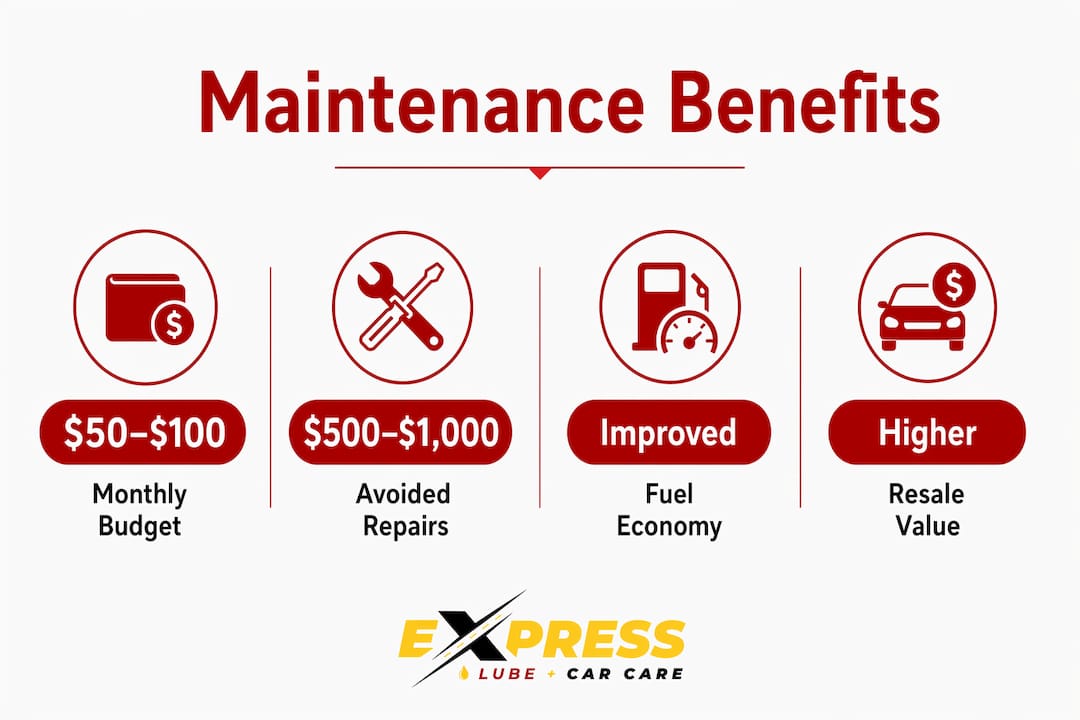
Routine upkeep does more than prevent breakdowns. It keeps your car running at its best, which directly affects how much you spend at the gas pump every week.

Tire pressure is a perfect example. Underinflated tires increase rolling resistance, which forces your engine to work harder and burn more fuel. Proper tire pressure and regular fluid changes measurably improve fuel efficiency and extend vehicle lifespan. A few minutes with a tire gauge can save you money every single fill-up.
Air filters work the same way. A clogged air filter restricts airflow to the engine, reducing combustion efficiency and cutting fuel economy. Swapping a dirty filter for a clean one is a $20–$30 fix that pays for itself quickly. Clean fuel injectors, fresh spark plugs, and correct fluid viscosity all contribute to an engine that runs the way it was designed to.
The lifespan benefits are just as significant. A vehicle that receives consistent care simply lasts longer. Engines that run on clean oil, cooling systems that stay properly filled, and transmissions that operate with fresh fluid all experience less internal wear. That means you replace your car less often, which is one of the biggest financial wins available to any car owner.
| Maintenance task | Benefit | Approximate cost |
|---|---|---|
| Oil change | Prevents engine wear and sludge | $50–$100 |
| Tire rotation and pressure check | Improves fuel economy, extends tire life | $20–$50 |
| Air filter replacement | Restores engine airflow and efficiency | $20–$30 |
| Coolant flush | Prevents overheating and corrosion | $100–$150 |
| Brake pad replacement | Protects rotors from damage | $100–$200 per axle |
Secondary savings show up in depreciation, too. A car that runs well and looks well-maintained holds its value better than one that has been neglected. That matters when you eventually sell or trade it in.
What practical strategies help you maintain your car without overspending?
Knowing that maintenance saves money is one thing. Doing it without wasting money is another. The biggest trap car owners fall into is over-servicing, paying for premium fluids or extra services their vehicle does not actually need.
Following your owner’s manual is the most cost-effective maintenance approach available. The manufacturer tested your specific vehicle and set those intervals for a reason. Ignoring them leads to neglect. Following them too aggressively, or upgrading to synthetic fluids your car does not require, leads to unnecessary spending. The manual is your budget guide, not just a technical document.
Here is a practical approach to managing maintenance costs without cutting corners:
- Read your owner’s manual. Know the actual service intervals for your vehicle. Do not rely on generic advice or upsells at the service counter.
- Build a maintenance calendar. Track your last oil change, tire rotation, and fluid checks. A simple spreadsheet or phone reminder works fine.
- Choose a reputable independent shop. Independent repair shops typically charge less than dealerships for the same quality of work. They also build familiarity with your specific car over time, which helps catch problems early.
- Learn a few DIY tasks. Checking tire pressure, topping off windshield washer fluid, and inspecting wiper blades are all tasks you can handle yourself in minutes. They cost almost nothing and keep small issues from growing.
- Ask questions at every visit. A good mechanic will tell you what needs attention now versus what can wait. That conversation alone can save you hundreds of dollars a year.
Pro Tip: When a shop recommends a service not listed in your owner’s manual, ask them to show you where the manufacturer specifies it. If they cannot, you probably do not need it.
Budgeting $50–$100 monthly for maintenance turns unpredictable emergency expenses into manageable routine costs. That shift in mindset, from reactive to proactive, is what separates car owners who stay ahead of repairs from those who get surprised by them. You can also explore a detailed car maintenance schedule by mileage to map out exactly what your vehicle needs and when.
How does vehicle upkeep protect resale value?
A well-maintained car is worth more money. That is not an opinion. It is how buyers and appraisers evaluate vehicles. Service records are the proof that your car was cared for, and they carry real financial weight at trade-in time.
Neglecting vehicle appearance and maintenance can reduce resale value by up to 30%. That is a significant loss on a $20,000 vehicle. Buyers pay more for cars with documented oil changes, inspections, and repairs because they are buying confidence, not just a car.
The benefits of a clean service history include:
- Higher appraisal offers from dealerships and private buyers who can verify the car’s condition.
- Faster sale times because buyers feel less risk purchasing a well-documented vehicle.
- Stronger negotiating position when you know your car has been properly maintained and can prove it.
- Lower depreciation over the ownership period, since well-maintained vehicles show less wear and hold their market value longer.
Think of your service records as a financial asset. Every oil change receipt and inspection report you keep adds to the story of a car that was treated well. That story translates directly into dollars when it is time to sell. Skipping services does not just cost you in repairs. It costs you at the sale.
Key Takeaways
Regular car maintenance saves money by preventing expensive repairs, improving fuel efficiency, and protecting resale value, making it the most reliable form of vehicle cost control available.
| Point | Details |
|---|---|
| Preventive care beats emergency repairs | Routine tasks costing $50–$100 prevent failures like transmission replacements at $6,000 or more. |
| Fuel efficiency improves with upkeep | Correct tire pressure, clean filters, and fresh fluids reduce fuel consumption on every trip. |
| Owner’s manual sets the right schedule | Following manufacturer intervals prevents both neglect and costly over-servicing. |
| Service records protect resale value | Documented maintenance history can prevent up to 30% loss in vehicle value at sale time. |
| Monthly budgeting removes financial surprises | Setting aside $50–$100 per month converts unpredictable repair bills into planned expenses. |
The real cost of skipping maintenance: a mechanic’s perspective
After years of watching car owners make the same expensive mistake, I want to be direct with you. The drivers who end up with the biggest repair bills are almost never the ones who drove hard or bought cheap cars. They are the ones who kept putting off the small stuff.
I have seen a $30 oil change turn into a $4,000 engine repair because the owner stretched the interval too long. I have watched a $150 brake job become a $600 rotor and caliper replacement because someone ignored the squeal for three months. These are not rare cases. They happen every week.
What surprises most people is how little it actually costs to stay ahead. You do not need to spend a fortune. You need to spend consistently. A relationship with a trusted mechanic who knows your car is worth more than any warranty. They will tell you what is coming before it becomes urgent, and that advance notice is where the real savings live.
My honest advice: stop treating maintenance as an optional expense. It is the cheapest insurance policy your car has. The drivers I see who never face major repair bills are not lucky. They are consistent.
— Hassan
Expresslubearlington keeps your maintenance costs under control
Staying on top of your vehicle’s service schedule is easier when you have a shop you trust. At Expresslubearlington, our ASE-certified technicians handle everything from routine oil changes to full preventive inspections, with fast turnaround times and transparent pricing that fits a real budget.
As a RepairPal Certified Shop and CarFax Top-Rated Service Center, Expresslubearlington brings the kind of expertise that catches small problems before they become expensive ones. Whether you need a quick fluid check or a full car care cost breakdown to plan your maintenance budget, our team is ready to help. Drivers across the DFW area count on us to keep their vehicles running well and their repair bills low. Stop by and see the difference that consistent, professional care makes.
FAQ
How much does regular car maintenance cost per year?
Annual maintenance costs typically range between $400 and $1,650 depending on mileage and driving habits. Budgeting $50–$100 per month covers most routine services for the average driver.
What happens if you skip regular vehicle maintenance?
Skipping maintenance leads to compounded damage across multiple systems. Neglected vehicles face failures like alternator replacement at $500–$1,000, transmission repair at $6,000, and engine replacement at over $10,000.
Does car maintenance really improve fuel economy?
Yes. Proper tire pressure, clean air filters, and fresh engine oil all reduce the load on your engine and lower fuel consumption. These are among the cheapest services available and pay back quickly at the pump.
How do service records affect resale value?
Documented service history signals proper care to buyers and appraisers. Neglecting maintenance and appearance can reduce resale value by up to 30%, making consistent upkeep a direct financial investment.
Should I follow the dealer’s service recommendations or my owner’s manual?
Follow your owner’s manual. Manufacturer maintenance schedules are set for your specific vehicle and prevent both under-servicing and unnecessary spending on premium fluids or extra services you do not need.